Introduction
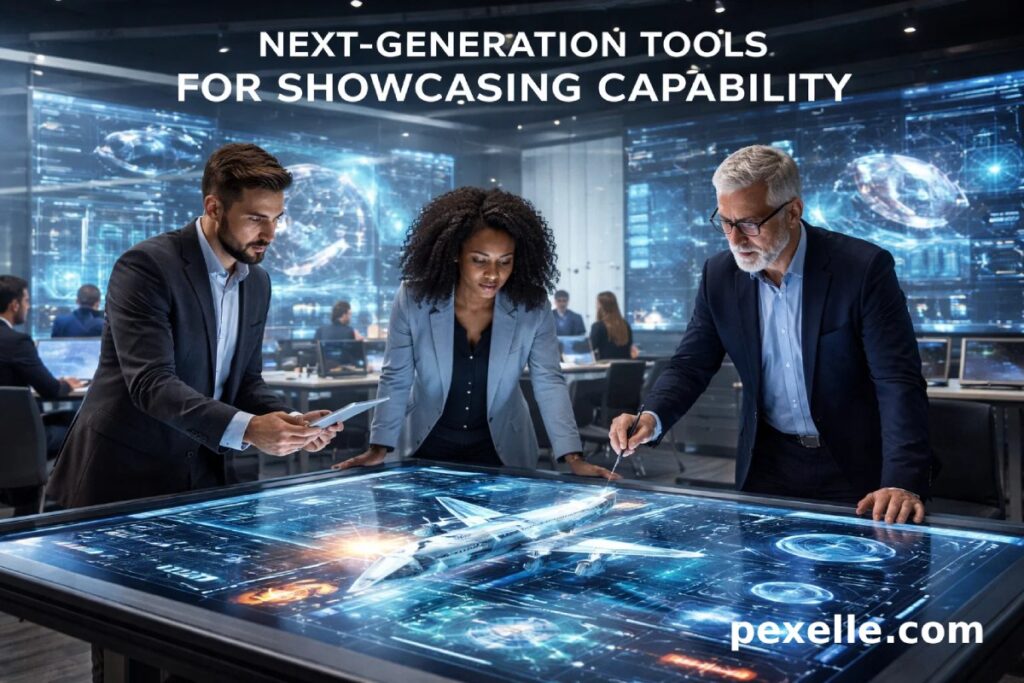
The way individuals demonstrate their abilities is undergoing a fundamental transformation. Traditional credentials such as resumes, degrees, and job titles were designed for a slower, more stable labor market. Today’s economy is dynamic, project driven, and increasingly digital. As a result, static documents are no longer sufficient to represent real capability. Next-generation tools for showcasing capability aim to make skills observable, verifiable, and continuously updated.
From Credentials to Capabilities
For decades, professional value has been communicated through proxies. A degree implied knowledge, a job title implied experience, and years of service implied competence. These signals are indirect and often misleading. Modern tools shift the focus from credentials to demonstrated capability. They emphasize what a person can actually do, how well they can do it, and in which contexts those skills have been applied.
Skill-Based Digital Portfolios
One of the most important developments is the rise of skill-based digital portfolios. Unlike resumes, these portfolios are structured around individual skills rather than job history. Each skill can be linked to concrete evidence such as code repositories, design artifacts, research outputs, simulations, or real project outcomes. This approach allows reviewers to directly inspect competence instead of inferring it.
Verifiable Evidence and Trust Layers
Trust is a core challenge in capability representation. Next-generation tools address this by attaching verification layers to evidence. These may include cryptographic signatures, third-party attestations, peer reviews, or automated validation systems. Verifiability reduces exaggeration and builds confidence for employers, collaborators, and institutions without relying on centralized authorities.
AI-Driven Skill Interpretation
Artificial intelligence plays a key role in making capability data usable. AI systems can analyze raw evidence and translate it into structured skill signals. For example, code analysis tools can infer proficiency levels from repositories, while natural language models can extract competencies from documents, discussions, or technical writing. This allows complex, unstructured work to be converted into comparable and interpretable capability profiles.
Dynamic Skill Maps and Growth Tracking
Another defining feature of next-generation tools is their dynamic nature. Capability is not static, and modern systems reflect that reality. Skill maps visualize how competencies evolve over time, highlighting growth, decay, and specialization. These maps help individuals understand their own development while enabling organizations to identify emerging strengths or gaps.
Contextual and Scenario-Based Assessment
Future tools increasingly emphasize context. A skill demonstrated in isolation is less meaningful than a skill applied under real constraints. Scenario-based assessments, simulations, and task-driven evaluations allow capability to be shown in conditions similar to real work. This reduces mismatch between hiring signals and actual performance.
Interoperability and Ownership
A critical design principle is user ownership of capability data. Next-generation systems aim to be portable across platforms, organizations, and borders. Interoperability standards allow individuals to reuse their capability records without rebuilding them from scratch for each opportunity. This shifts power away from closed platforms and toward individuals.
Organizational Benefits
For organizations, these tools enable more precise talent matching. Instead of filtering candidates by titles or institutions, teams can search for specific capabilities relevant to real tasks. This improves hiring accuracy, supports internal mobility, and enables data-driven workforce planning based on actual skills rather than assumptions.
Social and Economic Implications
At a broader level, capability-focused tools can reduce systemic bias. When evaluation is based on demonstrated ability rather than background, access to opportunity becomes more equitable. This is particularly important for self-taught professionals, career switchers, and individuals from non-traditional educational paths.
Challenges and Open Questions
Despite their promise, these tools raise important questions. Standardizing skill definitions across industries is difficult. Over-automation risks oversimplifying complex human abilities. Privacy and data misuse are real concerns when detailed capability profiles exist. Careful design, transparency, and governance are essential to avoid new forms of exclusion or surveillance.
Conclusion
Next-generation tools for showcasing capability represent a shift from symbolic credentials to real, evidence-based representation of human potential. By combining digital portfolios, verification mechanisms, AI analysis, and dynamic skill mapping, these systems offer a more accurate and fair way to understand what people can do. As work continues to evolve, the ability to clearly and credibly demonstrate capability will become a foundational element of the future economy..
Source : Medium.com