
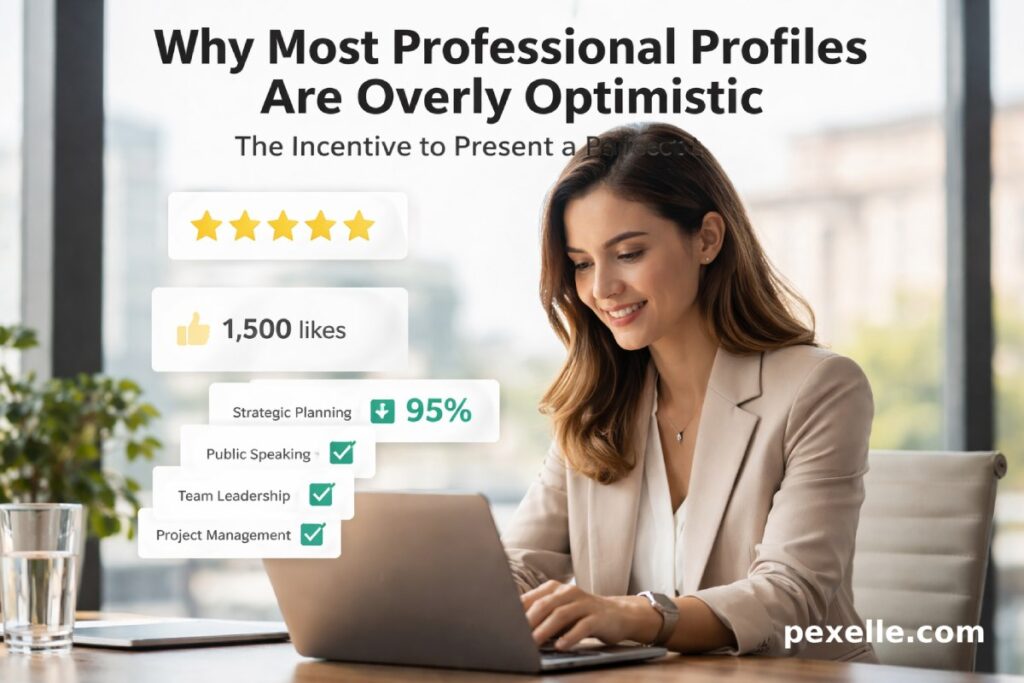
The Incentive to Present a Perfect Image
In today’s professional landscape, profiles on platforms such as resumes, portfolios, and professional networking sites often appear exceptionally positive and polished. Individuals naturally feel pressure to present themselves in the best possible light, particularly when employers, investors, or collaborators may form first impressions based solely on written profiles. As a result, many people emphasize achievements, highlight strengths, and minimize limitations. While this tendency is understandable, it frequently leads to profiles that portray a level of certainty, impact, or success that may not fully reflect reality.
Competitive Job Markets Encourage Positive Framing
One major reason for overly optimistic professional profiles is the intense competition present in many industries. When hundreds of candidates apply for the same opportunity, individuals often believe that modest descriptions of their abilities may place them at a disadvantage. To remain competitive, people tend to frame their experiences in the most favorable way possible. Words such as “led,” “transformed,” “optimized,” or “innovated” appear frequently because they signal initiative and impact, even when the actual contribution may have been smaller or more collaborative.
The Influence of Personal Branding Culture
The rise of personal branding has also contributed to this phenomenon. Professionals are increasingly encouraged to treat themselves like a brand, emphasizing visibility, storytelling, and perceived expertise. As a consequence, profiles sometimes resemble marketing materials rather than balanced summaries of experience. Success stories are highlighted, while failures, uncertainty, and learning processes are rarely mentioned. Although branding can help individuals communicate value clearly, it can also create profiles that appear unrealistically polished.
Platform Design Reinforces Optimism
The structure of many professional platforms indirectly encourages optimistic presentation. Profile templates often prioritize achievements, awards, certifications, and positive outcomes. There are few sections designed for discussing challenges, lessons learned from failure, or areas where a professional is still developing. Because the platform itself rewards visible success signals, users naturally shape their profiles around these expectations.
Psychological Bias Toward Self-Enhancement
Human psychology also plays an important role. Many individuals genuinely perceive their work and contributions through a positive lens. Self-enhancement bias leads people to remember successes more vividly than mistakes, and to interpret ambiguous outcomes in ways that support their self-image. This bias does not necessarily imply dishonesty; rather, it reflects a common cognitive pattern where individuals emphasize the parts of their experience that reinforce confidence and identity.
The Risk of Misaligned Expectations
While optimistic profiles can help individuals gain attention or opportunities, they may also create mismatched expectations. Employers or partners who rely heavily on profile descriptions may assume a higher level of expertise or responsibility than actually existed. When expectations and reality diverge, trust can be affected. Overly optimistic profiles may therefore create short-term advantages but lead to long-term credibility challenges.
The Value of Balanced Professional Narratives
A more balanced professional profile does not require highlighting every weakness, but it benefits from a degree of realism and transparency. Profiles that clearly describe roles, contributions, and outcomes without excessive exaggeration often build stronger long-term trust. Including evidence such as measurable results, collaborative context, or specific responsibilities can make profiles both credible and informative.
Moving Toward Authentic Professional Representation
As professional ecosystems evolve, there is growing recognition that authenticity may be more valuable than pure optimism. Employers and collaborators increasingly appreciate individuals who demonstrate learning ability, adaptability, and honest reflection. Profiles that communicate both achievements and growth processes can provide a more accurate picture of professional capability and potential.
Conclusion
The widespread optimism seen in professional profiles is shaped by competitive environments, platform design, personal branding culture, and psychological biases. While presenting strengths is an essential part of professional communication, excessive positivity can distort expectations and reduce credibility. A thoughtful balance between confidence and realism ultimately creates profiles that are both persuasive and trustworthy.
Source : Medium.com