
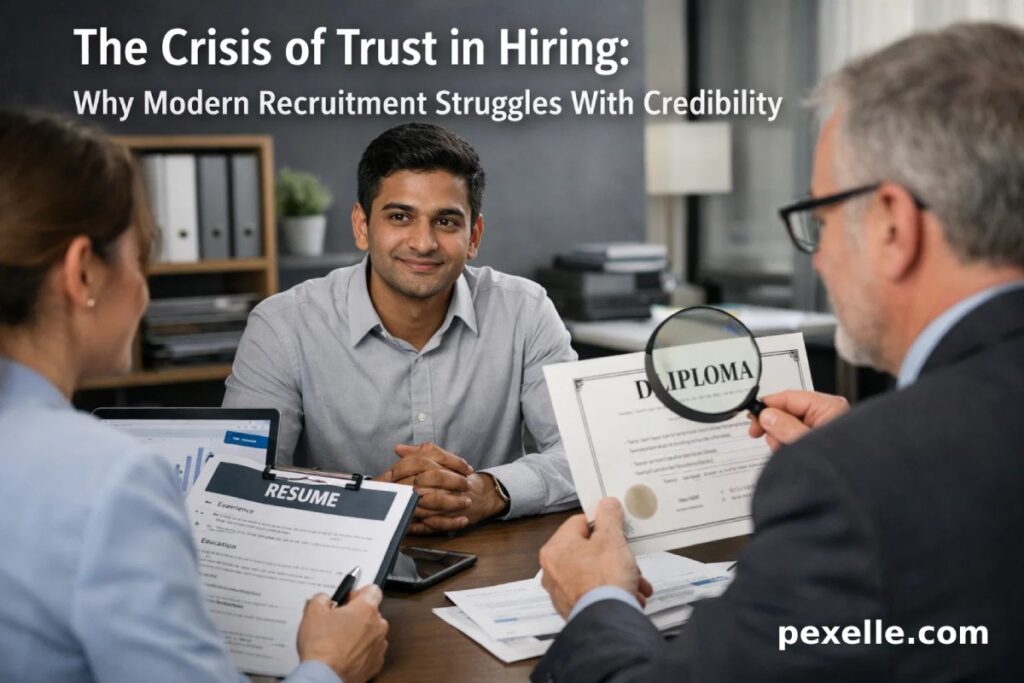
1. The Growing Problem of Trust in Recruitment
In modern labor markets, hiring is no longer a simple process of matching résumés with job descriptions. Over the past decade, organizations and job seekers have increasingly faced a deeper challenge: a crisis of trust. Employers often question whether candidates truly possess the skills they claim, while candidates doubt whether hiring decisions are fair, transparent, or even rational. This growing mutual skepticism has made recruitment more complex and uncertain than ever before.
2. Digitalization and the Inflation of Professional Profiles
The rise of digital job platforms has transformed how professionals present themselves. Online profiles, personal branding, and algorithmic recruitment tools allow candidates to showcase achievements in highly optimized ways. While these tools increase visibility, they also encourage exaggeration and selective presentation of experience. Employers reviewing hundreds of profiles must determine whether accomplishments reflect real competence or effective self marketing.
3. The Gap Between Credentials and Real Skills
One of the central causes of distrust in hiring is the widening gap between formal credentials and practical ability. Degrees, certificates, and short training programs have become more accessible, but they do not always demonstrate the capability to perform complex tasks in real environments. Employers frequently encounter candidates whose educational background appears impressive yet fails to translate into practical performance when evaluated in real work scenarios.
4. Automated Hiring Systems and Their Limitations
Many organizations now rely on automated screening systems to manage the overwhelming number of job applications. These systems filter candidates using keywords, scoring models, and algorithmic rules. While automation increases efficiency, it also introduces new risks. Highly capable candidates may be filtered out simply because their résumé wording does not match system expectations, while others pass through screening despite lacking deep competence.
5. Candidate Skepticism Toward Hiring Processes
Trust issues are not limited to employers. Candidates often experience hiring processes that feel opaque and unpredictable. Rejections may occur without explanation, interviews may involve inconsistent evaluation criteria, and communication from companies can be minimal. When applicants invest significant time preparing for interviews but receive no feedback, confidence in recruitment systems begins to erode.
6. Psychological Bias and Skill Overestimation
Human psychology also contributes to the trust crisis. Individuals tend to overestimate their competence, especially in fields where feedback is limited or subjective. Cognitive biases can lead candidates to believe they are more capable than objective performance would suggest. When hiring managers repeatedly encounter inflated self assessments, they may become increasingly skeptical of candidate claims.
7. Economic Pressure and Incentives for Misrepresentation
Competitive job markets can create incentives for candidates to exaggerate experience or skill levels. Automated recruitment filters often require specific keywords, years of experience, or certifications. To avoid being excluded early in the process, some candidates may modify their résumés strategically. Over time, this behavior contributes to an environment where both sides expect some level of exaggeration.
8. The Organizational Cost of Hiring Mistrust
When hiring decisions are made under conditions of uncertainty and distrust, organizations bear significant costs. Incorrect hiring choices lead to productivity loss, increased training expenses, and higher employee turnover. Teams may lose confidence in recruitment processes, and managers may become hesitant to rely on hiring recommendations. The long term result is reduced organizational efficiency.
9. The Candidate Experience and Lost Opportunities
Talented professionals can also suffer under a broken hiring system. Automated filtering may overlook unconventional career paths, interdisciplinary skills, or self taught expertise. Candidates with real ability may struggle to prove their competence through traditional application processes. As frustration grows, skilled individuals may disengage from formal recruitment channels entirely.
10. The Shift Toward Skill Based Hiring
In response to these challenges, many organizations are experimenting with skill based hiring approaches. Instead of focusing primarily on credentials or résumé history, companies increasingly use work simulations, technical assessments, and real task demonstrations. These methods allow employers to observe how candidates perform in realistic scenarios, reducing reliance on self reported information.
11. Transparency as a Foundation for Trust
Transparency is a crucial factor in rebuilding trust in hiring systems. Organizations that clearly communicate their evaluation criteria, hiring stages, and decision timelines help candidates understand the process. Providing constructive feedback after interviews also strengthens credibility and allows applicants to improve their future performance.
12. Verifiable Evidence of Skills and Experience
Emerging technologies and professional platforms are beginning to support verifiable records of work. Instead of static résumés, professionals can present portfolios, project histories, peer endorsements, and documented contributions. These forms of evidence provide a richer picture of capability and allow hiring managers to evaluate competence more reliably.
13. Cultural Changes Inside Organizations
Beyond tools and technology, organizations must also change how they approach hiring. Recruitment should be treated as a strategic capability rather than a simple administrative function. Structured interviews, standardized evaluation criteria, and collaborative hiring decisions can significantly improve fairness and reliability.
14. The Role of Education and Training Systems
Educational institutions also influence trust in hiring outcomes. Programs that integrate practical experience, industry collaboration, and project based learning tend to produce graduates whose skills are easier to evaluate. By aligning academic training with real workplace demands, the credibility of professional qualifications can be strengthened.
15. Rebuilding Trust in the Future of Work
The crisis of trust in hiring reflects broader changes in how work, education, and professional identity evolve in the digital age. As careers become more dynamic and skill based, traditional signals of competence lose clarity. Rebuilding trust will require systems that prioritize evidence, transparency, and real demonstration of ability. Organizations that adapt to this shift will be better positioned to identify genuine talent and build resilient teams for the future..
Source : Medium.com