
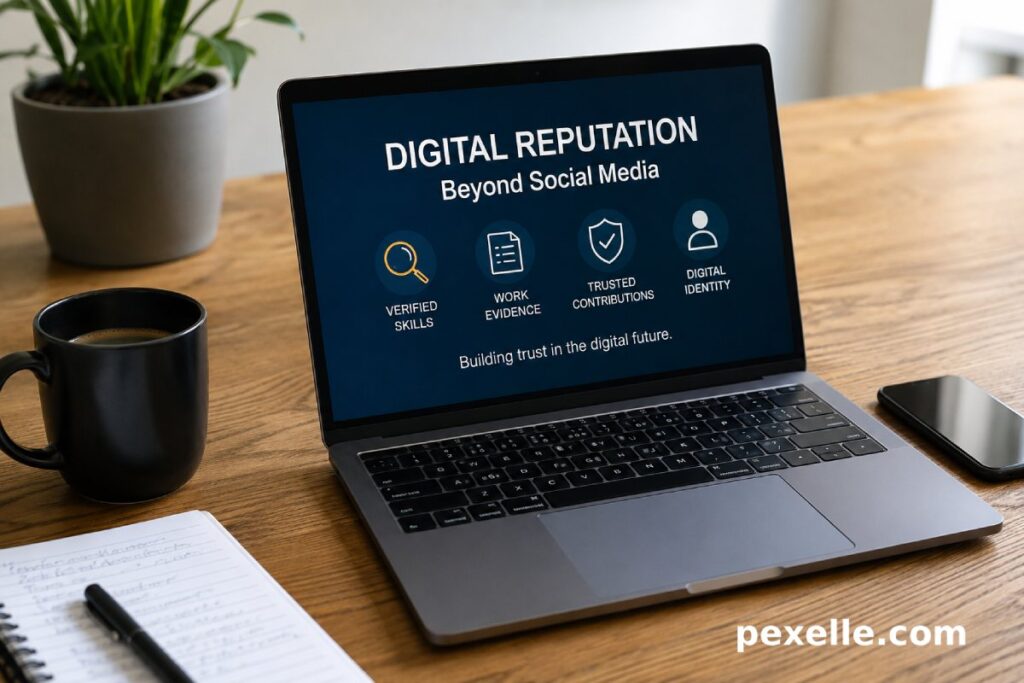
1. Introduction: Reputation Is Becoming Digital Infrastructure
Digital reputation is no longer limited to likes, followers, comments, or viral posts. For years, social media created a simplified version of reputation where attention was often mistaken for trust. A person with thousands of followers could appear influential, while someone with deep expertise but little online visibility could remain invisible.
The next phase of digital reputation will be different. It will be based less on popularity and more on proof. Instead of asking, “How many people follow you?” systems will ask, “What have you done, who verified it, and can the evidence be trusted?”
2. The Problem With Social Media Reputation
Social media reputation is fragile because it is built on signals that are easy to manipulate. Followers can be bought. Engagement can be inflated. Content can go viral for emotional reasons, not because it is accurate or valuable.
This creates a gap between visibility and credibility. A person may be popular without being reliable, while a skilled professional may have little public recognition. In business, hiring, education, and online communities, this gap creates serious problems.
3. From Attention to Verification
The future of digital reputation will move from attention-based metrics to verification-based systems. Instead of measuring how loud someone is online, platforms will measure evidence of skill, contribution, reliability, and trustworthiness.
This means reputation will become more structured. Work history, completed projects, verified skills, peer reviews, certifications, blockchain records, and professional contributions can all become part of a person’s reputation profile.
4. Evidence as the New Reputation Layer
Evidence will become the foundation of digital identity. A claim such as “I am a software developer” will be less valuable than proof such as GitHub contributions, completed projects, verified client feedback, technical assessments, or expert validation.
This shift creates a more fair system. People from different backgrounds can prove their abilities through real work, not only through university names, job titles, or social media presence.
5. Reputation Will Become Portable
Today, reputation is often trapped inside platforms. Your LinkedIn profile, GitHub account, Upwork reviews, or social media audience are controlled by separate companies. If you lose access to a platform, your reputation can disappear.
In the future, digital reputation will become more portable. Users will need reputation profiles that can move across platforms, employers, marketplaces, and communities. This is where decentralized identity, verifiable credentials, and blockchain-based records may play an important role.
6. The Role of AI in Digital Reputation
AI will make digital reputation more powerful, but also more risky. AI can analyze work samples, detect patterns, summarize achievements, and match people with opportunities. It can help employers understand not just what someone claims, but what their evidence shows.
However, AI systems must be careful. Reputation should not become a black-box score that unfairly judges people. The future must combine AI analysis with transparency, human review, and user control.
7. Beyond Followers: New Reputation Signals
Future reputation systems may include signals such as:
- Verified skills
- Completed projects
- Peer endorsements
- Expert reviews
- Work consistency
- Problem-solving ability
- Community contribution
- Trust history
- Learning progress
- Professional reliability
These signals are harder to fake than likes and followers. They show real value, not just online attention.
8. Business and Hiring Impact
Digital reputation will strongly affect hiring. Companies are already realizing that CVs and self-written profiles are not enough. They need proof of ability.
A verified reputation system can help companies identify candidates based on evidence, not only interviews or keywords. This can reduce hiring mistakes, improve trust, and give talented people more opportunities.
9. The Risk of Reputation Inequality
There is also a danger. If digital reputation systems are poorly designed, they could create new forms of inequality. People with early access to platforms, better networks, or more digital records may gain unfair advantages.
That is why future reputation systems must allow people to build credibility gradually. They should support beginners, career changers, immigrants, freelancers, and people from underrepresented backgrounds.
10. Privacy and User Control
A strong digital reputation system must respect privacy. Not every achievement, mistake, or work record should be public forever. Users must control what they share, with whom, and for what purpose.
The best systems will balance transparency with privacy. Reputation should help people build trust, not expose them to surveillance or permanent judgment.
11. Conclusion: Reputation Will Become Proof-Based
The future of digital reputation is not about becoming more famous. It is about becoming more verifiable.
Likes and followers will still exist, but they will no longer be enough. The next generation of reputation will be built on evidence, verified skills, trusted contributions, and portable identity.
In the digital economy, trust will become one of the most valuable assets. The people and platforms that can prove trust, not just claim it, will define the next era of online reputation.
Source : Medium.com