Verified Skills as the Missing Human Trust Layer in the Age of Artificial Intelligence
AI Needs More Than Intelligence
Artificial intelligence is rapidly becoming the operational layer of modern work. It writes code, summarizes meetings, analyzes documents, recommends decisions, generates content, automates workflows, and supports strategic planning. But as AI becomes more capable, one question becomes more important: how do we know which human skills should guide, validate, supervise, or be trusted inside AI-powered systems?
The Missing Human Context in AI
The future of AI will not be built only on better models. It will also depend on better human context. AI systems need to understand not only data, but also the people behind decisions, expertise, responsibility, and judgment. This is where skill evidence becomes essential. Verified skills can act as a human layer for AI systems, helping machines understand who is capable, who has proven experience, and who should be trusted in specific professional contexts.
The Weakness of Self-Reported Skills
Today, most digital professional profiles are based on claims. A person says they are a software engineer, project manager, cybersecurity expert, designer, or blockchain developer. They list skills on a CV, portfolio, or LinkedIn profile. But these claims are often static, self-reported, and difficult to verify. In a world where AI can generate polished resumes, portfolios, cover letters, and even fake work samples, traditional professional signals are becoming weaker.
From Claims to Evidence
The next generation of trust will require more than professional descriptions. It will require evidence. Skill evidence means real, observable, and verifiable proof that someone can perform a specific skill. This proof may come from completed projects, code contributions, certifications, peer validation, expert reviews, work history, practical assessments, learning achievements, or verified outputs. Instead of asking, “What do you claim to know?” the system asks, “What can you prove?”
Why AI Needs Verified Skill Data
For AI systems, this shift is critical. AI can process huge amounts of information, but it often lacks reliable human context. For example, an AI assistant in a company may know that a task is related to cloud security, but it may not know which employee has verified cloud security experience. It may know that a project needs UX review, but not who has proven UX research skills. It may summarize a technical debate, but not understand which participants have evidence-backed expertise in the topic.
Skill Evidence as Machine-Readable Trust
Verified skill evidence solves this problem by creating a structured human intelligence layer around AI. This layer helps AI systems make better recommendations, assign tasks more accurately, evaluate contributions more fairly, and route decisions to the right people. It turns human capability into a machine-readable trust signal.
A Smarter Way to Organize Work
In the workplace, this could change how teams operate. Instead of managers relying only on job titles, outdated CVs, or personal familiarity, AI-powered systems could match people to work based on verified evidence. A developer who has repeatedly solved performance issues could be recommended for optimization tasks. A designer with verified accessibility experience could be assigned to review inclusive design. A project manager with proven crisis-handling experience could be suggested for high-risk delivery situations.
Strengthening Human Judgment
This does not mean AI replaces human judgment. In fact, it does the opposite. Skill evidence strengthens human judgment by making expertise visible, contextual, and verifiable. AI can support decision-making, but verified human capability ensures that decisions are anchored in real-world experience. The human layer becomes the ethical, practical, and trust-based foundation around the AI layer.
The Risk of Blind Automation
One of the biggest risks of AI adoption is over-automation. Companies may start trusting AI recommendations without asking whether the right human expertise was involved. A system may produce a legal summary, a medical explanation, a financial analysis, or a technical recommendation, but the real question is: who reviewed it, and what evidence proves they were qualified to do so? Without verified human oversight, AI outputs can appear confident while still being wrong, incomplete, or risky.
Verified Oversight and Accountability
Skill evidence can create a stronger review and accountability model. In high-impact workflows, AI outputs could be checked by people with verified expertise. A cybersecurity recommendation could require review by someone with proven incident response experience. A hiring decision could be audited against verified skills rather than subjective impressions. A product launch plan could be validated by people with evidence-backed experience in compliance, engineering, design, and operations.
The Rise of Evidence-Based Reputation
This also introduces a new form of professional reputation. In the past, reputation was often based on degrees, company names, job titles, or personal networks. These signals are still useful, but they are not enough. The future will favor evidence-based reputation, where a person’s professional identity is built from what they have actually done, validated, and improved over time.
A Fairer Path for Hidden Talent
For individuals, this is powerful. Many talented people are underestimated because they lack famous credentials, prestigious employers, or strong networks. Skill evidence gives them a more direct way to prove capability. A self-taught developer, junior designer, technical writer, data analyst, or AI operator can build trust through verified outputs instead of waiting for traditional gatekeepers to approve them.
Better Workforce Intelligence for Companies
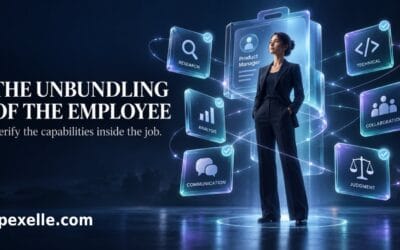
For companies, verified skill evidence creates better workforce intelligence. Most organizations do not truly know what their people can do. Job titles hide real skills. CVs become outdated. Internal knowledge is fragmented across tools, tasks, messages, projects, documents, and code repositories. AI systems connected to verified skill evidence could help companies understand their actual capability map: who knows what, who has proven what, where skill gaps exist, and where hidden talent is being underused.
AI Is Changing the Meaning of Work
This is especially important as AI changes job roles. The value of many roles will shift from performing repetitive tasks to supervising systems, validating outputs, designing workflows, interpreting results, and making judgment calls. In this environment, verified skills become the bridge between human capability and AI execution. The most valuable workers may not simply be those who know how to use AI tools, but those who can prove they have the domain expertise to guide AI responsibly.
Learning Must Be Connected to Proof
Skill evidence also matters for education and learning. AI can generate personalized learning paths, but without evidence, it cannot reliably know whether a learner has truly mastered a skill. Completing a course is not the same as demonstrating competence. A stronger system would connect learning to proof: practical projects, assessments, expert feedback, peer review, and real-world application. This allows AI to recommend the next learning step based on verified progress, not just course completion.
Recruitment Beyond Polished Resumes
In recruitment, verified skills could reduce noise and bias. Hiring is often full of weak signals: keyword-stuffed resumes, vague job descriptions, exaggerated experience, and inconsistent interviews. AI may make this worse if it simply ranks candidates based on polished text. But if AI systems evaluate candidates using structured skill evidence, hiring can become more accurate and fair. The focus shifts from who writes the best CV to who has the strongest proof of relevant capability.
Not All Evidence Is Equal
However, skill evidence must be designed carefully. Not all evidence has the same value. A certificate from a weak course, a copied project, or an unverified claim should not carry the same weight as expert-reviewed work, production experience, or repeated successful performance. Evidence systems need quality standards, context, timestamps, validation methods, and anti-fraud mechanisms. Otherwise, the evidence layer itself can become another surface for manipulation.
Privacy Must Be Protected
Privacy is also essential. A human skill layer should not become a surveillance layer. Tracking every action, message, or workplace behavior would be dangerous and unethical. The goal should be to verify capability, not monitor people unnecessarily. Evidence should be consent-based, transparent, explainable, and limited to relevant professional contexts. Individuals should understand what is being collected, how it is validated, and where it is used.
Skills Should Be Portable
Another important principle is portability. Skills should not be locked inside one company, platform, or institution. A person’s verified professional evidence should be portable across education, employment, freelance work, entrepreneurship, and digital platforms. This would allow people to build a long-term professional identity based on verified achievements rather than repeatedly proving themselves from zero in every new environment.
AI Agents Need Trusted Human Context
AI systems also need this portability. As agents and AI assistants become more common, they will need trusted human context across tools. An AI agent working inside a company might need to know who can approve a security change, who has evidence-backed knowledge of a product module, or who should review a compliance-sensitive document. Portable skill evidence can give AI agents a safer and more accurate way to interact with human expertise.
A New Architecture for Work
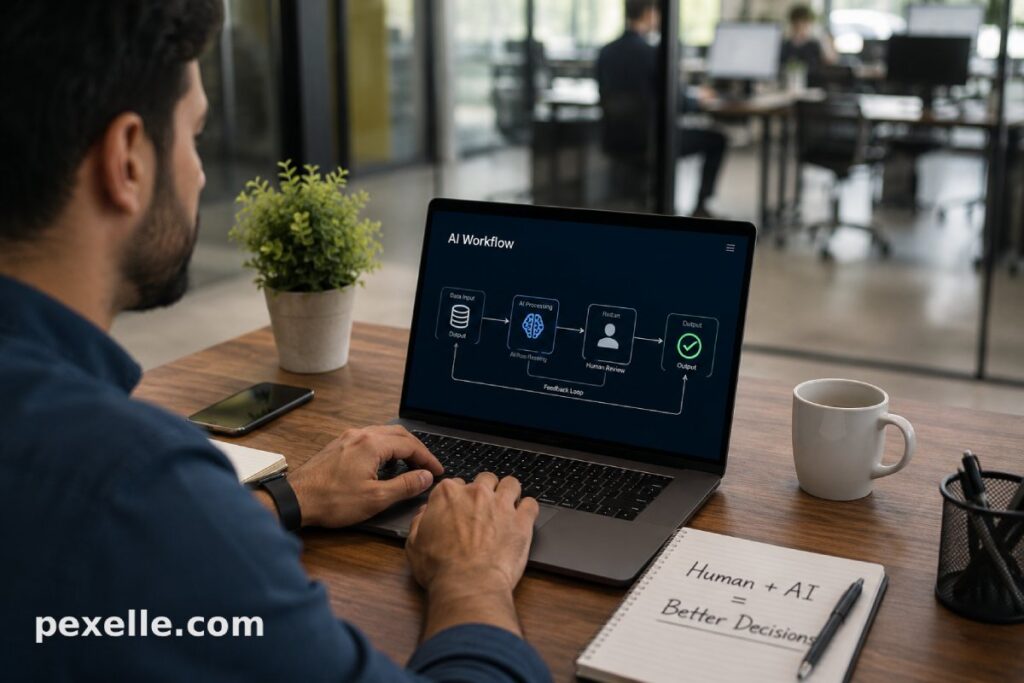
This could lead to a new architecture for work: AI as the automation layer, data as the knowledge layer, and verified human skills as the trust layer. In this architecture, AI executes and assists, data informs, and verified human capability governs. The system becomes more balanced because it does not rely only on machine prediction. It includes human proof, accountability, and judgment.
The Future of AI Is Socio-Technical
The future of AI is not purely artificial. It is socio-technical. It depends on the relationship between intelligent machines and trustworthy human capability. Models may become faster and more powerful, but organizations will still need to know who has the expertise to guide them, correct them, challenge them, and take responsibility for their use.
Skill Evidence as the Foundation of Trust
Skill evidence can become the foundation of this relationship. It makes human expertise visible to AI systems in a structured way. It protects organizations from blind automation. It gives individuals a fairer way to prove what they can do. It helps education become more outcome-based. It improves recruitment, workforce planning, task allocation, and professional reputation.
Evidence Will Define the Next Trust Layer
In the AI era, trust will not come from claims. It will come from evidence. And the most valuable AI systems will not be the ones that ignore human capability, but the ones that understand, respect, and amplify it.
Conclusion: Verified Skills Belong at the Core of AI
Verified skills are not just a feature of future professional platforms. They are a necessary human layer for the future of artificial intelligence. If AI is going to influence hiring, education, work allocation, decision-making, and professional reputation, then it must be connected to verified human capability. Skill evidence gives AI systems what they currently lack: a trusted, human-centered foundation for responsible intelligence.
Source : Medium.com