Introduction: Identity Beyond Titles
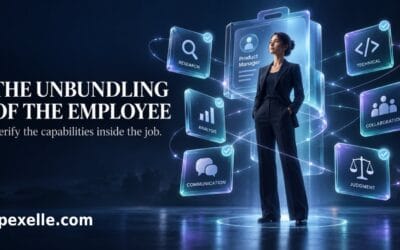
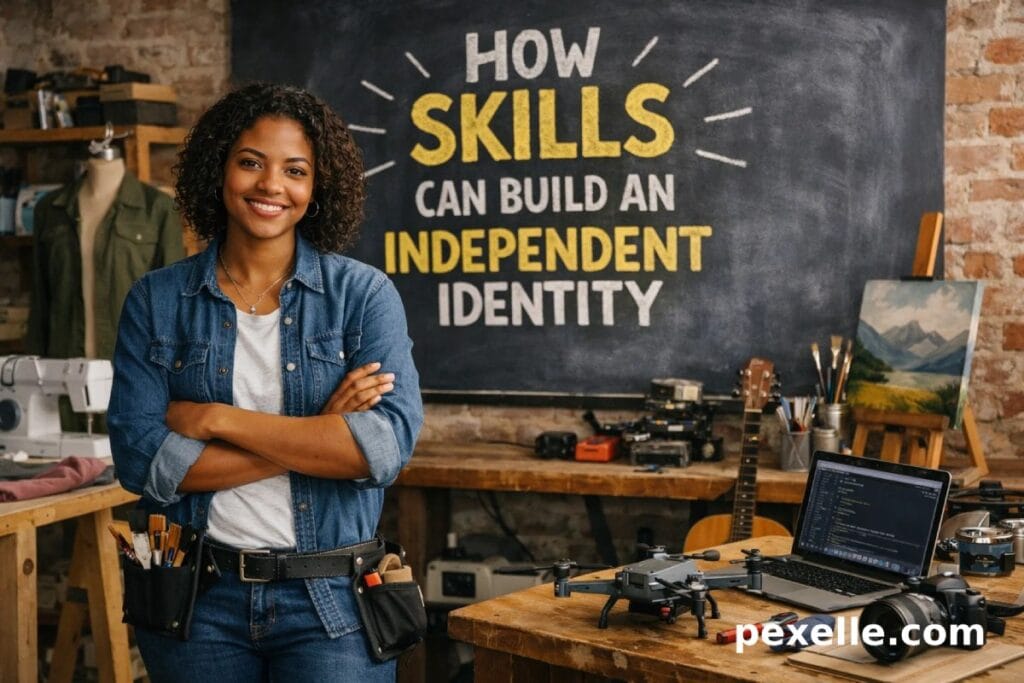
In traditional societies, identity has often been defined by external structures job titles, organizational roles, academic degrees, or social labels. People are introduced as “engineers,” “managers,” or “students,” and their worth is frequently measured through these predefined categories. However, this model is increasingly becoming outdated. In a rapidly evolving world shaped by technology, decentralization, and fluid career paths, identity is shifting from what institutions assign to what individuals can actually do. At the center of this transformation lies one powerful concept: skill.
The Limitation of Role-Based Identity
A role-based identity is inherently fragile. It depends on external validation and can change or disappear without warning. A job can be lost, a company can shut down, or an industry can become obsolete. When identity is tightly coupled to these external structures, individuals often experience instability and uncertainty when those structures shift. More importantly, job titles provide only a shallow representation of a person’s true capabilities. Two individuals with the same title may have vastly different skill sets, levels of expertise, and ways of thinking.
Skills as a Source of Stability
Unlike titles, skills are intrinsic and portable. They belong to the individual, not to the organization. A developer who understands system architecture, a designer who masters visual storytelling, or a marketer who deeply understands user behavior carries these abilities regardless of where they work. Skills do not disappear when a job ends they evolve, compound, and transfer across domains. This makes them a far more stable foundation for identity.
The Emergence of Skill-Based Identity
A skill-based identity is built on demonstrated ability rather than assigned labels. Instead of saying “I am a software engineer,” an individual might define themselves through a combination of capabilities: “I design scalable systems, optimize performance, and solve complex technical problems.” This shift may seem subtle, but it fundamentally changes how individuals perceive themselves and how others evaluate them. Identity becomes dynamic, evidence-based, and continuously evolving.
Independence from Organizational Structures
When identity is rooted in skills, individuals become less dependent on any single organization. They are no longer confined to a specific company, role, or career path. This independence enables greater flexibility: people can move between industries, take on freelance or project-based work, or even build their own ventures. In this model, organizations become platforms for applying skills not the source of identity itself.
The Role of Digital Platforms and Evidence
Modern digital platforms are accelerating the shift toward skill-based identity. Portfolios, GitHub repositories, online certifications, and content creation allow individuals to showcase their abilities in tangible ways. Instead of relying solely on resumes or degrees, people can present real evidence of what they can do. This creates a more transparent and merit-based system, where identity is validated through action rather than claims.
Continuous Evolution and Lifelong Learning
A skill-based identity is not static. It requires continuous learning and adaptation. As industries evolve and new technologies emerge, individuals must update and expand their skill sets. This ongoing process of growth becomes part of their identity. In contrast to traditional models where identity is fixed after a certain point (e.g., after obtaining a degree), skill-based identity embraces change as a core principle.
Psychological Impact: Ownership and Confidence
Building identity around skills also has profound psychological effects. It fosters a sense of ownership and self-reliance. Individuals begin to trust their abilities rather than external validation. This can lead to increased confidence, resilience, and motivation. When setbacks occur such as losing a job those with a skill-based identity are more likely to recover quickly because their sense of self is not tied to a single role.
Challenges and Considerations
Despite its advantages, a skill-based identity also presents challenges. It requires individuals to actively manage and communicate their skills, which can be difficult without proper tools or platforms. There is also the risk of fragmentation having many skills but lacking a coherent narrative. Additionally, not all industries have fully embraced this shift, and traditional credentials still play a role in many contexts.
The Future: A Decentralized Identity Model
Looking ahead, the concept of identity is likely to become increasingly decentralized. Instead of being defined by institutions, individuals will construct their own identities through a combination of skills, experiences, and verified evidence. Technologies such as blockchain and decentralized platforms may further support this shift by enabling secure, portable, and verifiable records of skills and achievements.
Conclusion: Redefining Who We Are
In a world where change is constant, building identity on external structures is no longer sufficient. Skills offer a more resilient, flexible, and authentic foundation. They allow individuals to define themselves independently, adapt to new opportunities, and navigate uncertainty with confidence. Ultimately, a skill-based identity is not just about what we can do it is about reclaiming ownership of who we are.
Source : Medium.com